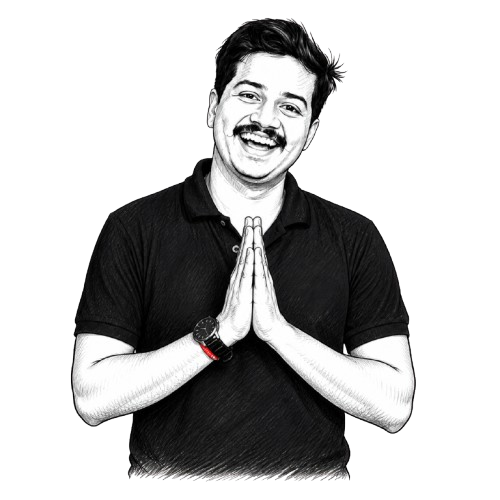
I'm based in Mumbai, working at the intersection of product design, mechanical engineering, and early-stage startups. Most of my days are split between hands-on design and engineering work - sketches, CAD, prototypes - and consulting work with founders building real products. For nearly four years I ran innovation and incubation at riidl, one of India's leading design and innovation labs. It's a combination I didn't plan for, but one I've grown to think is exactly right for where Indian product-building is today.
I grew up in Mumbai and studied mechanical engineering here before leaving for Delft to do my master's in Industrial Design Engineering at TU Delft. The Netherlands years changed how I think - Delft has a particular rigour about design process that I absorbed deeply, and the exposure to European product culture gave me a reference point I still use constantly. I came back to Mumbai by choice. The problems here are harder, the constraints are real, and the opportunity to build things that matter to a billion people is not something you walk away from.
The most formative work I've done has been with early-stage hardware founders — people building physical products who are figuring out manufacturing, user fit, and investor narrative all at once. PSP Bowling Machines taught me that the gap between a working prototype and a shippable product is enormous, and that most founders don't know what they don't know until they're already in that gap. That's where I've learned to be useful — not as someone who knows all the answers, but as someone who's seen enough of the terrain to help teams avoid the expensive mistakes.
I care about building a culture of real-world product thinking in India — hardware, deep-tech, things you can hold. The startup ecosystem here is still heavily SaaS-oriented, and there's a generation of founders who want to build physical products but don't have enough experienced people around them who've actually done it. A big part of what I've done through teaching, through Fab Academy, through nearly four years at riidl, has been trying to close that gap — one founder, one programme, one cohort at a time.
Meaningful Design
Great power involves great responsibility.
Design can change lives - and that's precisely the point. Every product I work on carries forward into the world, into homes and hands and habits, long after the design process ends. The power to shape how people experience things comes with responsibility: to think about the repair, the edge case, the five-years-later version of the user who bought it. Good design doesn't just solve the brief - it solves it in a way that doesn't create new problems downstream.
Minimalist Design
Being simple isn't simple!
Reduction is the hardest discipline in design. It's easy to add - a feature, a flourish, a fallback. Stripping something down until only the essential remains takes far more rigour, far more iteration, far more courage. The strongest solutions come from clarity and restraint. Every element I add must earn its place: does it solve a real problem, or does it just make the thing look more complete? The designs I'm most proud of are the ones where I figured out what to leave out.